

Every second counts in an emergency. Yet many young people (and adults) still hesitate, unsure which number to call, especially when travelling or living across borders. European 112 Day, marked every year on 11 February, exists to turn uncertainty into instinct. Its purpose is simple and powerful: to make sure everyone in Europe knows that 112 is the single emergency number, free of charge, available from any fixed or mobile phone, anywhere in the EU.
For teachers, 112 Day is a natural fit for the classroom. It speaks to citizenship, safety, responsibility and real-life skills: knowledge that can quite literally save lives. Educational activities around 112 Day help students understand what constitutes an emergency, how emergency services work, and why misuse of emergency numbers has real consequences. It also opens space for practical discussions: What information should you give the operator? Why staying on the line matters? How location sharing works on smartphones? And how helping does not always mean acting, but sometimes calling.
Here is a detail students often find surprising: 112 works even if a mobile phone is locked, and in many cases even without a SIM card. It is part of the GSM standard, meaning phones are designed to prioritise emergency calls over everything else. Another curiosity lies in the digits themselves. Using two different numbers (1 and 2) was a deliberate choice to reduce accidental calls and make dialling easier under stress, especially on older phones and in high-pressure situations.
A small song that could help your younger students remember the phone number is ‘left thumb up for 1, right thumb up for 1, and both thumbs together for 2’.
Bringing 112 Day into the classroom does not require elaborate preparation. A short scenario-based discussion, a role-play of an emergency call, or a simple quiz can make the number stick for life. More importantly, it helps students see themselves as capable, responsible actors in moments that matter.
- Publication date
- 11 February 2026
- Author
- Directorate-General for Communication
- Type of content
- News
Related links
What matters most to young people in Europe? That's the question at the heart of the second meeting of the President's Youth Advisory Board, held in Brussels on 22 July.
The EU Youth Dialogue gives young people across Europe the chance to share their ideas with policymakers. Watch this short video to discover how it works and why your voice matters!

On 15 July, we celebrate World Youth Skills Day – a reminder that the skills young people develop today will help shape the Europe and the world of tomorrow.
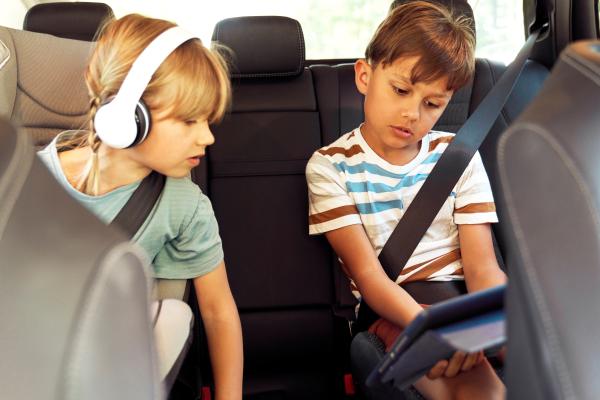
How can we make the internet a safer place for everyone? Two new leaflets are now available with practical online safety tips – one for children and teenagers, and one for parents and caregivers.
From 1 July 2026 to 31 December 2026, Ireland will hold the Presidency of the Council of the European Union, a key role that rotates every six months between EU countries.
On 18 June, three important EU institutions—the European Parliament, the Council of the European Union and the European Commission—signed the first-ever Joint Declaration on Culture.